No Riding vs Hands-Off: How to Choose an Elephant Sanctuary in Chiang Mai
Updated · Idea Smile Tour, Chiang Mai

There are dozens of elephant camps around Chiang Mai, and the labels they use don't always mean the same thing. "No riding" and "hands-off" are two different levels, and many places described as "ethical" are really no-riding camps where visitors still feed and bathe the elephants. This guide explains the difference so you can choose a visit you're comfortable with. To be clear about our own tours: every elephant visit Idea Smile Tour sells today is a no-riding visit, not a hands-off one.
What "no riding" means
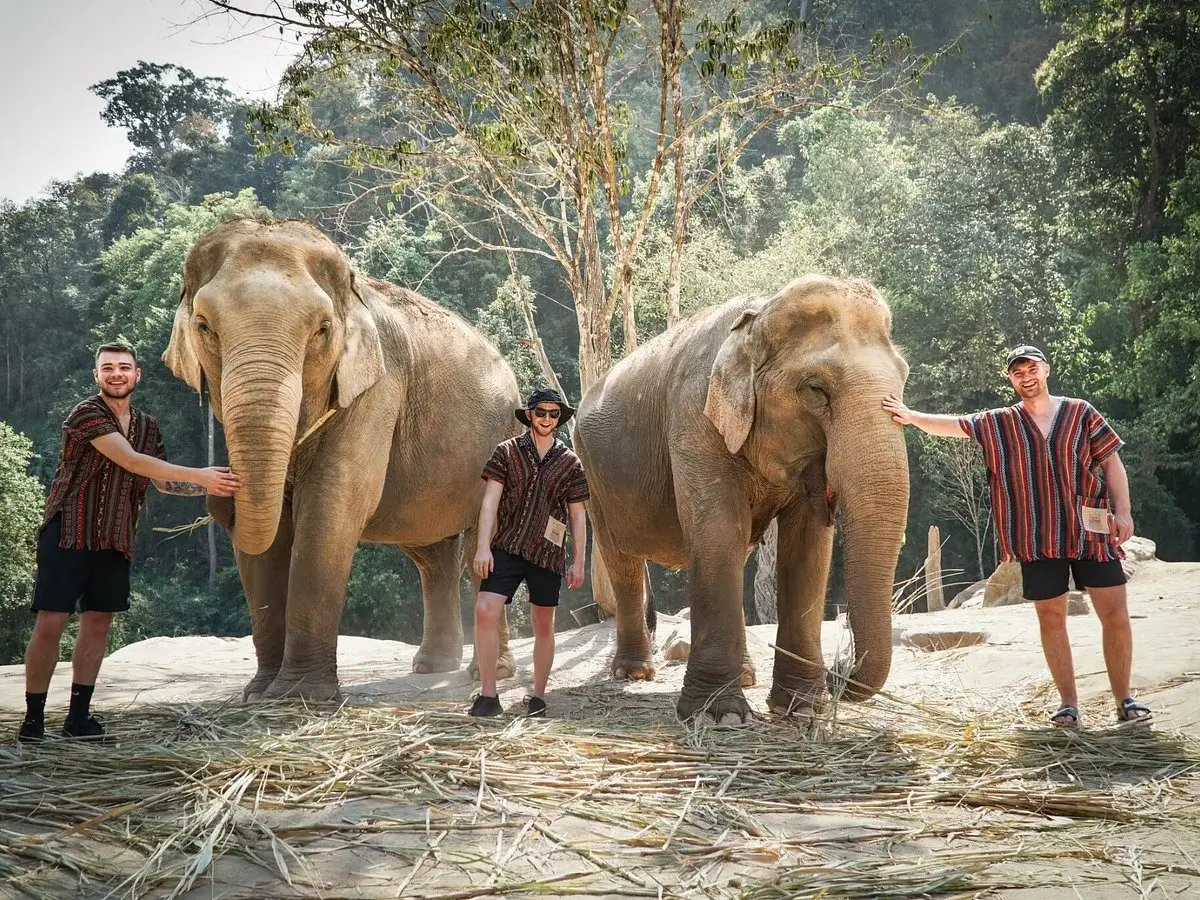
On a no-riding visit, nobody rides the elephants and there are no shows or painting tricks. You still spend the day close to the herd: you usually prepare food, feed the elephants by hand, join them in a mud spa and help bathe them in the river, with the camp's mahouts guiding the visit.
Most elephant visits in Chiang Mai, including all of the ones we sell, are no-riding visits.
- No riding, no shows, no painting
- Feeding, walking alongside, mud spa and river bathing are usually part of the day
- Mahouts guide the visit and stay with the elephants
What "hands-off" (observation-only) means
A hands-off visit goes further. There is no riding, no touching, no feeding and no bathing. You watch the elephants from a respectful distance while they eat, wander, bathe themselves and spend time with the herd.
In this guide and on our website, we only use the word "Ethical" for this hands-off, observation-only model. We don't currently sell a hands-off elephant visit.
- No riding
- No touching
- No feeding
- No bathing
- You observe from a distance
Why they aren't the same
Removing riding is a real change, but feeding and bathing still mean the elephants' day is arranged around visitors. Elephants can keep themselves clean, and World Animal Protection points out that bathing sessions are arranged for visitors, which leaves the elephants little choice about taking part.
So a no-riding camp isn't automatically equivalent to an observation-only venue, even when it's marketed as a sanctuary or as ethical. Read the itinerary, not just the name.
What World Animal Protection recommends
World Animal Protection, an international animal welfare charity, advises travellers to avoid tourism activities that involve direct interaction with captive elephants, including riding, shows and bathing, and to look for venues where elephants are observed rather than handled. Read its article Elephant bathing is not as ethical as you think.
Its 2026 report on Thailand found that observation-only venues often scored highest for elephant welfare, while also noting that observation alone doesn't guarantee good welfare. Read the summary: Captive elephants still suffering in Thailand, but new report finds some hope.
What we sell today
Every elephant tour on Idea Smile Tour is a no-riding visit, and each one is marked "No riding" on its tour page. These visits include hands-on activities such as preparing food, feeding and, at most camps, bathing the elephants. None of the camps we work with holds an independent welfare certification that we can point to.
If you'd prefer a hands-off, observation-only visit, we don't currently offer one, and we'd rather tell you that than sell you something that doesn't match what you're looking for.
What a typical no-riding visit looks like
Most camps are in the hills of the Mae Taeng valley, about 1 to 1.5 hours from the Old City, so tours include hotel pickup. You usually change into clothes provided by the camp, help prepare food such as bananas and sugar cane, feed the herd, then follow them into the mud and down to the river.
Lunch is normally served at the camp (often a simple Thai meal such as pad thai) before the drive back.
Half day or full day?
A half-day visit takes about five to six hours door to door and covers the essentials. It's the easiest option if you only have a few days in Chiang Mai. Examples: Bamboo Elephant Family Care's half day (morning or afternoon) and Big Boy Elephant Sanctuary's half day, which adds a pad thai cooking class.
A full day lets you slow down or add something else: a jungle trek to a waterfall, white-water or bamboo rafting, an ATV ride, or a climb up the Sticky Waterfall. There's also a day that combines Doi Suthep temple in the morning with a family-run elephant home in the afternoon. At Elephant Jungle Sanctuary you can choose a full day or Walk with Elephants, or stay the night on the overnight visit.
What to wear and bring
On a no-riding visit with a river bath, you will get wet and muddy.
- Swimsuit or clothes that can get muddy
- Towel and a change of clothes
- Sunscreen
- Comfortable walking shoes
Questions worth asking before you book
Ask exactly what visitors do with the elephants (feeding, bathing or watching only), how long you'll spend with them, how big the group is, what's included (pickup, lunch, insurance) and what happens if it rains. We're happy to answer these at our Old City desk or by message, and every tour page lists exactly what's included.